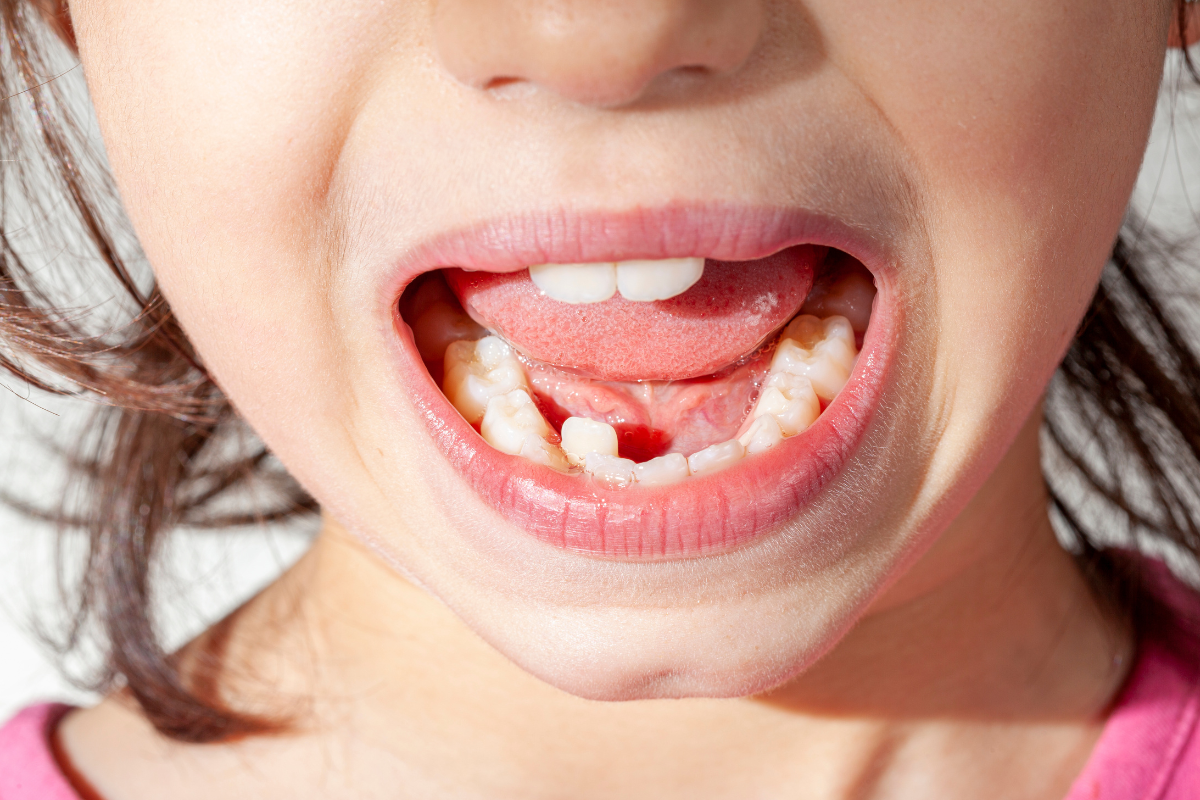
There’s a stage in childhood when a smile may begin to look a little crowded, uneven, or unfinished. A permanent tooth may be coming in behind another tooth, two bottom teeth could be suddenly overlapping, or one adult tooth looks like it has nowhere to go.
When a child’s teeth start getting crowded, the first question is usually pretty straightforward: Is there actually enough room in there?
Crowded teeth in children develop when there isn’t enough room for permanent teeth to line up comfortably within the mouth. How much the crowding matters depends on which teeth are involved, how much space is available, where the remaining permanent teeth are developing, and how the child’s bite fits together.
What Causes Crowded Teeth in Children?
We can think of the permanent teeth and the space available for them as two parts of the same equation. A child may have relatively large permanent teeth, a smaller dental arch, or simply not enough available space for all of the teeth to line up comfortably. Genetics also can play a role, which is why crowding often runs in families.
But inherited tooth and jaw size aren’t the only factors – there are a few more that can cause crowding:
1) Losing a Baby Tooth Too Early
Baby teeth reserve spots for the permanent teeth developing underneath them. When one is lost earlier than expected because of decay, injury, or another problem, neighboring teeth can gradually drift toward the empty space. That reduces the room available when the permanent tooth is eventually ready to come in.
Depending on the child’s age and which tooth was lost, a space maintainer may be recommended to help preserve that opening.
2) Baby Teeth That Stay Too Long
Crowding can happen in the opposite direction, too. Occasionally, a permanent tooth begins erupting while its baby tooth is still firmly in place. In these cases, the permanent tooth may appear behind, beside, or at an angle to the baby tooth.
What happens next depends on the individual tooth and how much room is available. Your dentist can determine whether the baby tooth simply needs more time or whether something is interfering with the normal eruption path.
3) Permanent Teeth Are Larger Than the Space Available
Adult teeth are larger than the baby teeth they replace, and several permanent teeth may be trying to find their places at roughly the same stage of childhood.
That can produce a smile that looks surprisingly crowded for a while. If you notice permanent teeth coming in crooked, limited space may be part of the reason.
Which brings us to an important question:
Can Crowded Permanent Teeth Straighten as a Child Grows?
They can, to a point. New permanent teeth don’t always arrive perfectly aligned. As additional baby teeth are lost and the mouth continues developing, some teeth gain room and improve in position without orthodontic treatment.
What we don’t want to do is assume that all crowding will resolve on its own. A tooth that’s slightly rotated is very different from a permanent tooth erupting almost completely outside the dental arch. The amount of space available matters, as does the position of permanent teeth that haven’t erupted yet.
That’s why looking at the whole mouth is much more useful than judging one crooked tooth in the mirror.
How Do Dentists Know if There Is Enough Room?
This is where an exam and dental X-rays can tell us much more than we can see above the gumline.
Your child’s mouth may still contain permanent teeth that won’t erupt for years. X-rays allow us to see where those teeth are developing and how they’re positioned in relation to the teeth already in the mouth.
We can consider:
- The amount of visible crowding
- Space available in the dental arch
- Position of unerupted permanent teeth
- Timing of baby-tooth loss
- How upper and lower teeth fit together
- Whether a permanent tooth appears blocked from erupting normally
Looking at those pieces together helps determine whether the smile needs more room, more time, or orthodontic treatment.
Can Crowded Teeth Cause Dental Problems?
Crowding isn’t only a cosmetic concern. Overlapping teeth can create tight spaces that are difficult to clean with a toothbrush and floss. Plaque can remain along overlapping surfaces and near the gumline, increasing the risk of cavities and gum inflammation.
More significant crowding can also interfere with the eruption of permanent teeth. A tooth without a clear path into the mouth may erupt in an unusual position or, in some cases, remain impacted.
How the teeth fit together matters, too. Crowding that occurs alongside a bite problem may affect chewing or how pressure is distributed across the teeth.
How Are Crowded Teeth in Children Treated?
There isn’t one standard treatment for dental crowding. What makes sense depends on the amount of available space, which teeth have erupted, and your child’s stage of development.
Observation
For mild crowding in a child who still has many baby teeth, the recommendation may simply be to watch what happens as more permanent teeth arrive.
No appliance. No braces. Just another look as the smile develops.
Space Maintenance
If a baby tooth is lost prematurely, a space maintainer for children may sometimes be used to prevent neighboring teeth from drifting into the opening.
This doesn’t straighten crowded teeth. Its purpose is to protect space that the developing permanent tooth may need later.
Early Orthodontic Treatment
Certain types of crowding may benefit from treatment while a child is still growing. The specific approach depends on what’s causing the lack of space and how the bite is developing.
An orthodontic evaluation can help determine whether there is an advantage to addressing the problem now or waiting until more permanent teeth have erupted.
Braces or Other Orthodontic Treatment
Braces for crowded teeth may be recommended once enough permanent teeth are present. Other types of orthodontic treatment for crowded teeth may also be considered depending on your child’s bite, available space, and stage of development.
Timing varies considerably. Crowding alone doesn’t tell us when treatment should begin.
Concerned About the Way Your Child’s Teeth Are Coming In?
If you’ve noticed overlapping teeth or a permanent tooth erupting somewhere unexpected, our pediatric and orthodontic teams can evaluate the available space and determine what, if anything, needs to happen next.
Does My Child Need Braces for Crowded Teeth?
Crowded teeth don’t automatically equal braces. The questions to ask before that step are:
- How much space is available?
- Which permanent teeth still need to come in?
- Is the crowding affecting the bite or oral health?
- And is it likely to improve as the mouth develops?
Those answers will help determine the recommendation. This is also why the American Association of Orthodontists recommends a first orthodontic evaluation by age 7. At that stage, an orthodontist can see enough of the developing permanent smile to identify certain spacing and eruption concerns, even though most children won’t begin comprehensive braces at 7.
What Can Parents Do at Home?
You don’t need to measure spacing or figure out whether your child needs orthodontics yourself. There are a few things worth keeping an eye out and letting your dental team know, though, such as:
- Teeth beginning to overlap significantly
- A permanent tooth erupting behind or far in front of another tooth
- A permanent tooth that seems to have no room to emerge
- Floss becoming difficult to get between crowded areas
- Food repeatedly getting trapped between overlapping teeth
- A noticeable change in how your child’s teeth meet when they bite
Keep brushing and flossing crowded areas carefully, and bring up anything you’ve noticed at your child’s next visit.
If a permanent tooth appears to be erupting somewhere especially unusual or your child is experiencing pain, you don’t have to wait for the next routine appointment to call us.
Frequently Asked Questions About Crowded Teeth in Children
Why are my child’s bottom teeth coming in crooked?
The lower permanent incisors are larger than the baby teeth they replace and may initially erupt with limited space. Some alignment can improve as the mouth develops, while more significant crowding may persist.
Will crowded teeth straighten on their own?
Mild crowding can sometimes improve as additional baby teeth fall out and more space becomes available. Significant overlap or teeth erupting well outside the dental arch are less likely to resolve completely without treatment.
Can losing baby teeth early cause crowding?
Yes. Losing certain baby teeth prematurely can allow neighboring teeth to move into the open space, leaving less room for the permanent tooth underneath.
Can crowded teeth cause cavities?
They can increase the risk. Overlapping teeth create areas that may be harder to brush and floss thoroughly, allowing plaque to accumulate.
Do crowded teeth always require braces?
No. Treatment depends on the severity of crowding, available space, eruption of permanent teeth, and the child’s bite.
Make Room for the Right Plan
A crowded smile doesn’t tell the whole story. What’s happening underneath the gums, how much room remains, and which teeth still need to arrive are often just as important as the teeth you can see.
At Hamilton Dental Associates, our pediatric and orthodontic teams can look at those pieces together. Through comprehensive pediatric dental care, we can follow permanent teeth as they erupt and bring orthodontic care into the picture when it makes sense.
If you’re noticing crowding in your child’s smile, ask us about it at their next visit or schedule an evaluation. We’ll take a look at the space available, the teeth still developing, and what makes sense for the next stage of their smile.
At Hamilton Dental Associates, we’re proud to help families throughout Mercer County and Central New Jersey by Making Smiles for Life.